
LeoVegas Malta: Address, Licence and Clone Checks
A familiar logo is the weakest form of identification a player has. Search results, adverts and forwarded links reproduce it in seconds, while only one address is actually recorded for the operator behind LeoVegas. The findings that follow begin with that address test and then keep to what the primary records support: the named company and licence reference, the legal frame in Malta, the points where a session exposes login and payment data, and the steps that limit damage when the wrong address was used.
Start with the lookalike-address test
Copied pages succeed because most people read styling faster than they read a hostname, so reverse the order: check the address, then decide whether the page deserves a password.
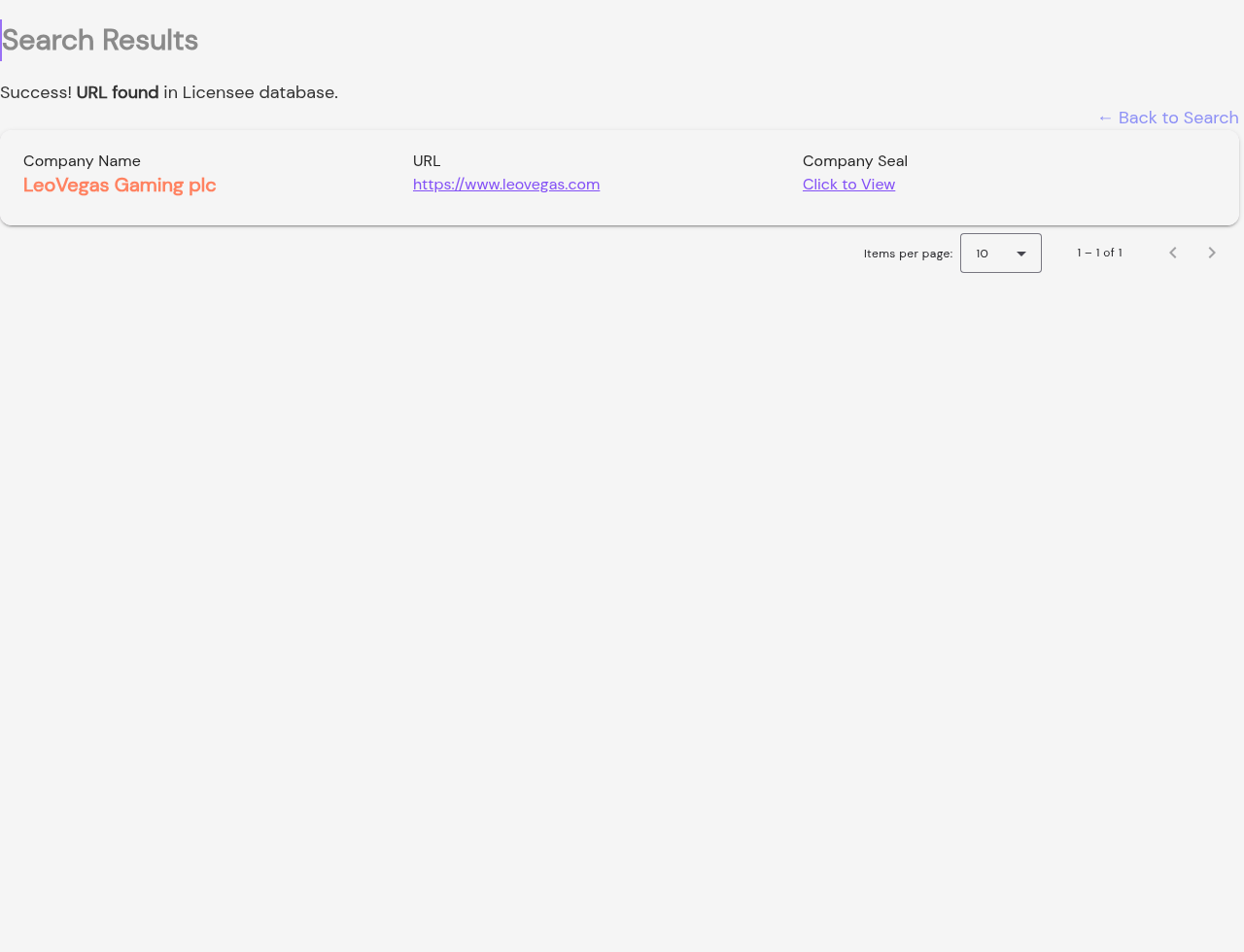
On 21 August 2026 the string leovegas.com was submitted, character for character, to the Malta Gaming Authority address checker at https://mgaurlchecker.mga.org.mt/, and the query returned the named current record held for that address. The tool is literal by design. It answers about the text submitted, not the brand intended, so a variant carrying an inserted hyphen, one swapped letter, an added word or a different ending is a separate query that may return nothing at all.
Three habits keep the test honest: type the address by hand instead of following a link, repeat the query if a redirect moves you elsewhere, and treat an empty or mismatched result as a stop signal rather than a fault in the tool.
What the recorded LeoVegas address settles
| Item | On record |
|---|---|
| Address queried | leovegas.com, submitted character for character |
| Query result | Named current record returned for that exact address |
| Named company | LeoVegas Gaming plc |
| Licence reference | MGA/CRP/237/2013 |
| Licence expiry | Not stated in the evidence used |
| Evidence tier | Primary: regulator address query and licensee register |
| Checked on | 21 August 2026 |
| Reading | Green, on current primary evidence for address and company |
Read that narrowly. On the check date, one precise address matched a current primary record naming a licensed company and a licence reference. That is the whole content of a green reading. It expresses no view on game selection, promotional terms, the speed of one cash-out or the handling of one account, and it does not age well alone: a record checked in August is evidence about August.
Reaching the recorded address by typing it, rather than through an advert or a forwarded message, removes the most common point of failure: View the option.
The company on the licence reference, and the Maltese legal frame
The record returned for the queried address names LeoVegas Gaming plc with the licence reference MGA/CRP/237/2013. A reference is only meaningful beside the address it was returned for; the same string pasted into the footer of an unrelated page proves nothing about that page. The authority publishes a live licensee register beside its address checker at https://www.mga.org.mt/licensee-hub/licensee-register/, which is where a company and reference can be confirmed as still listed. No expiry date forms part of the evidence used, so none is stated.
Gaming in Malta sits under Chapter 583, the Gaming Act, published at https://legislation.mt/getpdf/6022c4d3bc827214c09b92a6. Authorisation attaches to a company and to the addresses recorded for it, never to a brand name in the abstract, which is why the legality question and the clone question are answered by the same query. Wider reading on how references are read sits under licence and law.

Scam or legitimate: three tiers, kept apart
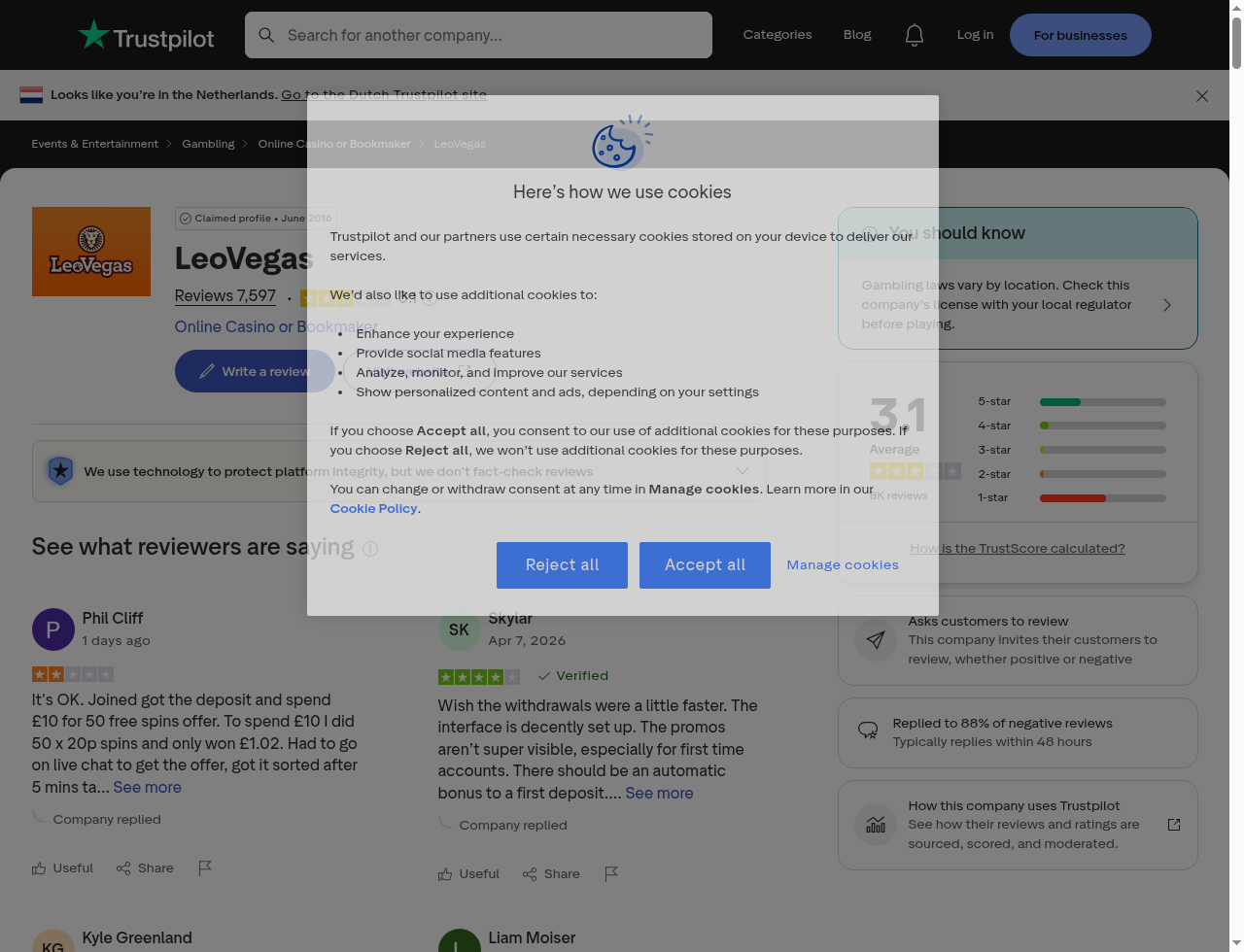
Primary evidence here is the regulator's address query and the register that lists authorised companies. It supports one conclusion: on 21 August 2026 the exact address was recognised, under a named licensed company and reference. Operator-tier material is whatever the service states about itself, useful for understanding stated policy and never proof of it. User-context material is the captured public review profile for the brand, which shows that dated opinions exist and roughly how they cluster, without verifying a single event inside them.
An individual account of a dispute stays an allegation until a dated record from a competent source settles it. No adverse decision of that kind appears in the evidence used, which is why the reading is not red. Equally, no primary record confirms how any particular complaint ended, so quiet records are not a clean bill of service.
Where a session exposes login and payment data
Credential theft starts before any payment screen, at whichever page collects a password. The order below follows a session as a player meets it.
| Step in a session | Confirm before continuing | If it does not hold |
|---|---|---|
| Landing page | The typed address matches the recorded host exactly | Close the tab and retype the address |
| Login prompt | No redirect happened between typing and the password field | Enter nothing; restart from a typed address |
| Deposit form | Same host in the address bar as at login, connection secured | Cancel the payment and re-run the address query |
| Document upload | The request appears inside the account, not in an unsolicited message | Send nothing; reopen the account from a typed address |
| Cash-out request | The request is visible afterwards in your own account history | Keep screenshots and reference numbers before contacting support |
Two rules cover most incidents: never type credentials on a page reached from a message or advert, and never continue a deposit after an unexplained redirect, however faithful the styling. General card and transfer considerations sit under payments; no individual deposit or cash-out method is named here, because none is documented in the evidence used.
Withdrawals, identity checks and holds
No cash-out was tested, and no processing times, limits, fees or identity-check requirements form part of the evidence, so none are described. The gap cuts both ways: it is neither a claim of quick payouts nor an allegation of delay, and filling it from public sentiment would misstate the record.
What a player controls is documentation. Note the exact address used for every deposit and cash-out request, save the reference numbers and timestamps shown in your own account rather than trusting memory, and if documents are requested, upload them only from a session that began at the typed recorded address. Two markers matter more than any published estimate: whether the request appears in your own account history, and whether every step of it happened on the same address.
Containment and complaints after a lookalike login
Credentials entered on a page that failed the address query are a data incident rather than a service dispute, and order matters.
| Order | Action | Keep as record |
|---|---|---|
| 1 | Leave the suspect page without retyping credentials | The full address exactly as it appeared |
| 2 | Change the password from a device and session you trust | Time and date of the change |
| 3 | Add a second authentication factor where one is offered | The confirmation screen |
| 4 | Tell the card issuer or bank if payment data was entered | Case or reference number |
| 5 | Re-run the regulator address query on the recorded host | Query result and its date |
| 6 | Raise a written complaint with support, then escalate to the authority | Dated copies of every message |
Where a dispute concerns a genuine account instead of a copied page, escalation runs from the service's own support to the authority that holds the licence reference, and written records outperform phone calls at every stage. How allegations are treated before publication is set out at complaints and warnings. If gambling itself is the problem rather than the address, see urgent help and responsible gambling.
A clone check that takes under a minute
Repeat it on a new device, after any advert click, and whenever a session resumes following a long gap. Compare what is on screen against the recorded address, not against a remembered logo.
| What you see | Why it matters | Reading |
|---|---|---|
| An added word, hyphen or number in the host | The extra characters make it a different address from the record | Stop |
| A different ending after the name | Endings are not interchangeable and are not covered by the record | Stop |
| The regulator query returns nothing for the string you typed | The address is not the recorded one, whatever the page looks like | Stop |
| A password prompt reached from a message or advert link | Credential capture usually begins before any payment screen | Do not log in |
| Recorded host reached by typing, query result matches | Address and company align with the current primary record | Continue |
None of it needs technical skill, only the discipline of reading the address bar first. Other operators checked under the same procedure are indexed at casinos.
Risks, unknowns and the limits of the evidence used
- No licence expiry date appears in the evidence, so no expiry is stated.
- No cash-out was tested; processing times, limits and fees remain undocumented.
- Identity-check requirements are undocumented and therefore not described.
- No dated adverse decision from a competent source appears; equally, no dated record confirms how any individual dispute ended.
- The captured review profile is sentiment, not verification of a single event.
- Bonus terms, payment methods and game-supplier lists were outside these checks.
- Every finding carries the date 21 August 2026; recorded addresses, register entries and company details can change afterwards without notice.
The practical consequence is that a green reading is a starting point for a first deposit decision, not a substitute for repeating the address query whenever the route to the page changes.
Evidence chronology, methodology and corrections
| Source | Role | What it supports | Checked |
|---|---|---|---|
| MGA-CHECKER | Primary | The captured exact-address queries display the named current record returned for each selected address | 21 August 2026 |
| MGA-REGISTER | Primary | The authority provides a live licensee register and an exact-address checker | 21 August 2026 |
| LAW-583 | Primary | Chapter 583 is Malta's Gaming Act and establishes the statutory gaming framework | 21 August 2026 |
| CTX-LEOVEGAS | User context | A dated public review profile exists for the brand; individual reports are unverified | 21 August 2026 |
The sequence was fixed: the exact address first, the licensee register second, the statutory frame third, and public sentiment last and only as context. Nothing moved up a tier because it was plentiful, and no finding was extended from the brand to any other address. The procedure behind tier and signal decisions is documented at methodology and editorial policy. Corrections are welcome where a dated primary record contradicts something stated above; send the record and its date through contact, and a corrected reading will replace the current one under its own check date.
Frequently asked questions
Is LeoVegas a scam or a legitimate address for players in Malta?
The exact address queried on 21 August 2026 returned a named current regulator record under a licensed company and the reference MGA/CRP/237/2013, so the recorded address is not a copy. That covers the address and the company on that date, not the outcome of any individual account or cash-out.
Which address does the record actually cover?
Only leovegas.com exactly as submitted. A variant with an added word, a hyphen, a swapped letter or a different ending is a separate string, and a query on it can return nothing even when the page styling looks identical.
What does the licence reference confirm, and what does it not?
It identifies the authorised company and the entry under which the address was recorded. It says nothing about promotional terms, game selection, support quality or cash-out speed, and no expiry date is given here because none appears in the evidence used.
Do the captured public reviews prove how withdrawals are handled?
No. The captured profile shows that dated opinions exist and how they cluster, which is context only. Each account of a dispute stays an allegation until a dated record from a competent source settles it, and no such record appears in the evidence used.
What should I do first if I logged in through a lookalike page?
Leave the page without retyping credentials, change the password from a device and session you trust, and add a second authentication factor if one is offered. Contact your card issuer if payment details were entered, and keep the address, timestamps and screenshots first.
Why is the reading green rather than a promise about payouts?
Green means current primary evidence matched the exact address and the named company on the check date. Payouts were not tested and no processing times are documented, and inferring them from sentiment would overstate what the records support.