
Bet365 in Malta: hostname forensics, licence status and open evidence
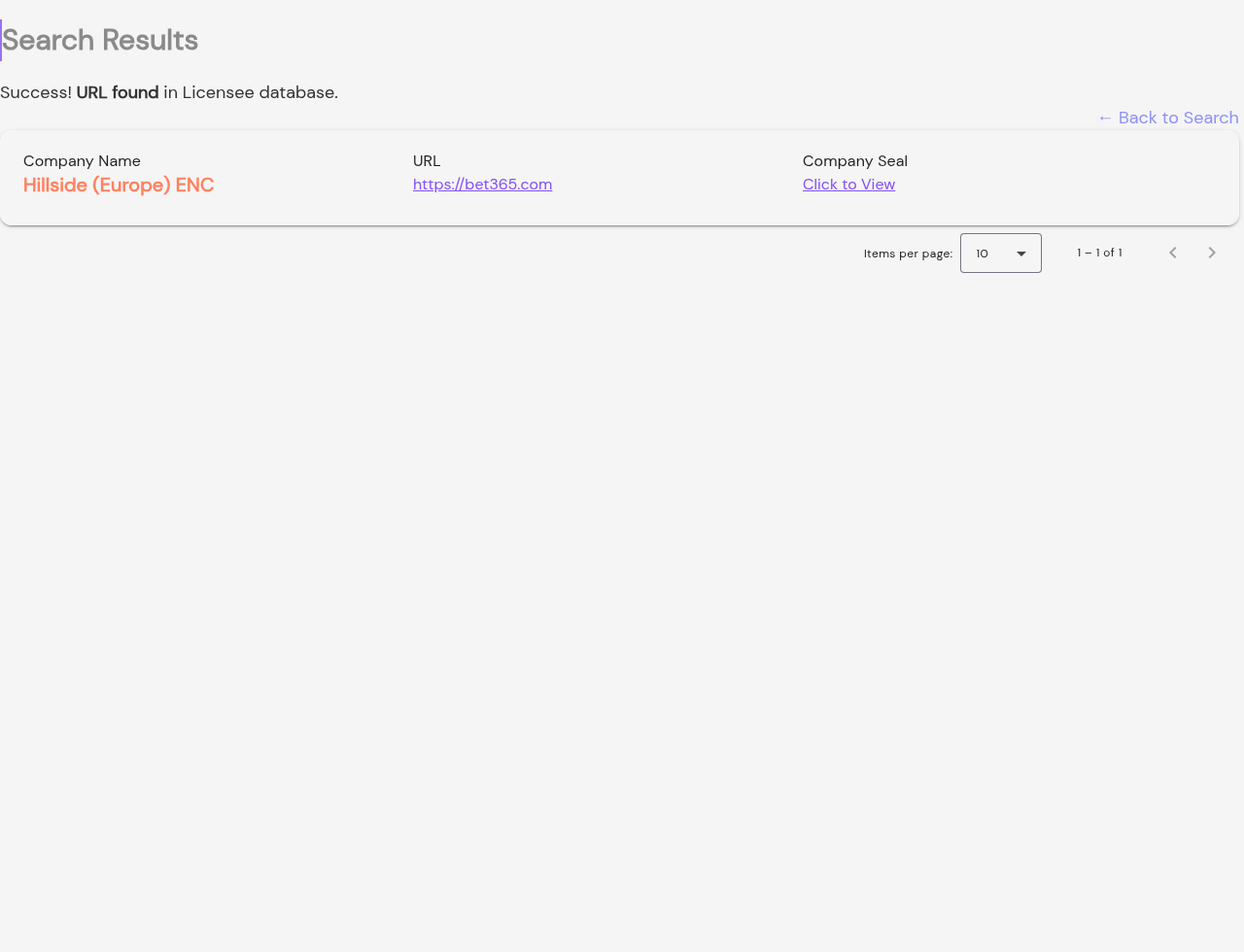
Anyone who reaches a betting-and-casino page through an unfamiliar link should read the address bar first and the branding last. Four dated records, all checked on 21 August 2026, sit behind the rating given for the exact host: two Maltese primary sources, the statutory text of Chapter 583, and one public review profile that counts as context only. The address examined is bet365.com, the operator named for it is Hillside (Europe) ENC, and the licence field on the live seal returned by the exact-address query carried no number. That single gap decides the outcome. Nothing adverse has been established against the host, and nothing current and primary confirms the licence detail for it either, so the rating stays amber and each claim that follows is tied to one of those four records.

The address audit that comes before any deposit
Six checks decide whether the address in front of you is the host named in the record or a lookalike wearing the same colours, and they run in order: the first failure ends the visit. Character-by-character comparison outranks visual trust, because a swapped letter, an inserted hyphen or an unfamiliar sub-domain costs an imitator nothing, while a copied logo costs even less. Two of the six can be settled from the current records; the rest depend on what your own browser shows at the moment you look, which is why they are marked reader-verifiable rather than passed.
| Check | Where to look | Pass condition | Status in the current record |
|---|---|---|---|
| Exact hostname | Address bar, read character by character | Resolves to bet365.com with no extra words or hyphens | Matches the address that was queried |
| Certificate subject | Padlock, then certificate details | Subject names the same registrable domain | Reader-verifiable; not in the records |
| Exact-address query | Malta's licence URL checker | A record is returned for the precise address entered | Captured on 21 August 2026 |
| Licence number on the seal | Footer seal and the returned record | A number is displayed and matches a register entry | Not shown; open item |
| Redirect chain | Link preview, then the final address | No hop to a different registrable domain | Not in the records |
| Cashier host | Address bar on the payment step | Stays on the same registrable domain or a named processor | Reader-verifiable; not in the records |
What the exact-address query returns
Malta's authority publishes a tool that answers one narrow question: which record, if any, is returned for the precise web address entered. The narrowness is the point. Entering a full address instead of a brand word removes the guesswork that imitation sites depend on, and the answer either names the address queried or it does not. The capture held for the exact host was taken on 21 August 2026 through Malta's exact-address checker, and it reproduces the named current record returned for that query. The seal in that return displays no licence number. Treat the absence as an open item to close rather than proof of an offence: a missing identifier in a captured seal and a documented breach are different findings, and only the second would justify a red rating.
The named operator and the licence field that stays open
Corporate identity and address control are separate questions, and conflating them is how readers end up on a clone that names a real company in its footer. The operator recorded for the brand is Hillside (Europe) ENC. None of the four records supplies a registration number, a licence class, an issue date or an expiry date for that entity, so none is asserted. Anyone who wants the company side first-hand can search the authority's licensee register by legal name and compare three fields: the exact legal name, the status of the entry, and the addresses listed against it. A name that appears in a footer but not in the register, or a register entry listing different addresses, is the discrepancy worth acting on. Wider notes on Maltese authorisation sit under licence and law.
Scam or legitimate: where the four records stop
The two questions readers actually arrive with are whether the service pays and whether it is permitted. On the first, the file contains no adverse record, no regulatory action, no documented non-payment and no withdrawal test carried out by our desk, so a scam finding would overstate what exists. It would equally overstate matters to call Bet365 verified for the exact address, because the licence identifier that would tie host, entity and authorisation together did not appear in the captured return. Complaints circulating in public commentary remain allegations until a dated competent record says otherwise. Amber therefore describes the evidence honestly: unresolved, rather than either endorsed or condemned. The practical consequence is procedural — check the address yourself, keep your own dated receipts, and set limits before the first stake rather than after a dispute.
Where your own address audit passes and you intend to play from Malta under the operator's published terms, our routed link opens the service directly: View the option. A deposit cap and a session reminder set before the first stake matter more than any welcome offer, and the tools worth switching on first are listed under responsible gambling.
Legal or not from Malta: the frame set by Chapter 583
Legality in Malta is set by statute, not by brand familiarity. Chapter 583, the Gaming Act, establishes the statutory framework under which gaming is authorised and supervised, and the consolidated text is published as a PDF of Chapter 583. What the Act settles is the frame: authorisation is granted to entities under defined conditions and supervision, and an offer is either covered by that authorisation or it is not. What it cannot settle is the standing of one hostname on one date, which is precisely why the exact-address checker and the register exist alongside it. For a reader the sequence is statute, then register, then exact address; reading in the other direction produces the familiar mistake of treating a well-known brand as automatically covered wherever its name appears.
Clone, lookalike and redirect checks
Imitation of a large sportsbook brand is cheap, and the giveaways are structural rather than cosmetic. Compare the registrable domain instead of the page design, treat any address reached through an advertisement, a shortened link or a forwarded message as unverified until it is re-entered by hand, and be sceptical of a seal that is an image with no number and no working query behind it. Each signal below carries an innocent and a hostile reading; the response column costs nothing to follow either way.
| Signal on the page | Innocent reading | Warning reading | Response |
|---|---|---|---|
| Address differs by one character from the queried host | None worth relying on | Typo-squat aimed at login details | Leave, then type the address by hand |
| Login form sits on a different registrable domain | A separated identity provider | Credential capture | Stop and read the certificate subject first |
| Seal image with no number and no query behind it | Careless build | Copied seal | Run the exact address through the checker |
| Cashier pushes one unusual transfer route only | Limited local coverage | Funds routed to a third-party account | Do not send funds; ask for the named processor |
| Support reachable only through a messaging handle | Small team | No accountable written channel | Require a written channel before depositing |
Payments: traceable items and open ones
Payment specifics are where invented detail does the most damage, so the position is reported exactly as it stands: no deposit method, fee, currency or processor is documented in the four sources for the exact address, and none is assumed. Everything in the payments column is therefore verifiable by the reader at the moment of use, which is also the only moment that counts. A screenshot of the cashier confirmation screen, with amounts and timestamps visible, becomes your own primary record if a dispute follows. Market-level notes on transfer types sit under payments.
| Payment item | Status | Why it is open | Reader check |
|---|---|---|---|
| Accepted deposit routes | Not established | No record in the four sources | Cashier list after login |
| Fees and currency conversion | Not established | No pricing document held | Confirmation screen before approval |
| Cashier host address | Not held | Payment step not captured | Address bar on the payment step |
| Named payment processor | Not established | No processor record held | Descriptor on the card or bank statement |
| Payment-page certificate | Reader-verifiable | Depends on the live session | Certificate subject in the padlock panel |
Withdrawals and identity verification
No withdrawal test exists for the exact address, so any timings the cashier displays are operator statements rather than measured outcomes. Identity verification is the point where a first payout most often stalls, usually for reasons within a player's control: an account name that does not match the payment instrument, an address document older than the accepted window, or an upload that crops the edge of the page. Assemble the file before the first deposit and date every submission.
| Stage | Documented in the current record? | Practical step |
|---|---|---|
| Payout speed | No test exists | Treat displayed windows as claims until you hold a dated receipt |
| Identity documents requested | Not documented | Screenshot each request and the date it was made |
| Source-of-funds request | Not documented | Ask in writing which threshold triggers it |
| Pending or reversal window | Not documented | Read the cashier's stated window before the first request |
| Name match on the payment instrument | Not documented | Keep the account name identical to the card or bank holder |
When something goes wrong: the escalation order
Escalation works when it is documented and sequential, and it fails when a player argues inside a live chat window that keeps no copy. Move in writing from the first message onward, keep every reference number, and treat each stage as a file you are building rather than a conversation you are winning. Warnings held on Maltese-facing services are listed under complaints and warnings, and a documented case or correction can reach us through contact.
| Step | Where it goes | What to include | Realistic outcome |
|---|---|---|---|
| 1 | Operator's written support channel | Account reference, dated screenshots, exact amounts | A reference number and a stated response window |
| 2 | The operator's own complaints route | Original ticket reference and a timeline | A written final position |
| 3 | Whichever dispute route the operator's terms name | Full file and chronology | An eligibility decision, then examination |
| 4 | Card issuer or bank | Transaction identifiers and a terms extract | A chargeback assessment where the rules allow one |
Public review signals and the weight they carry
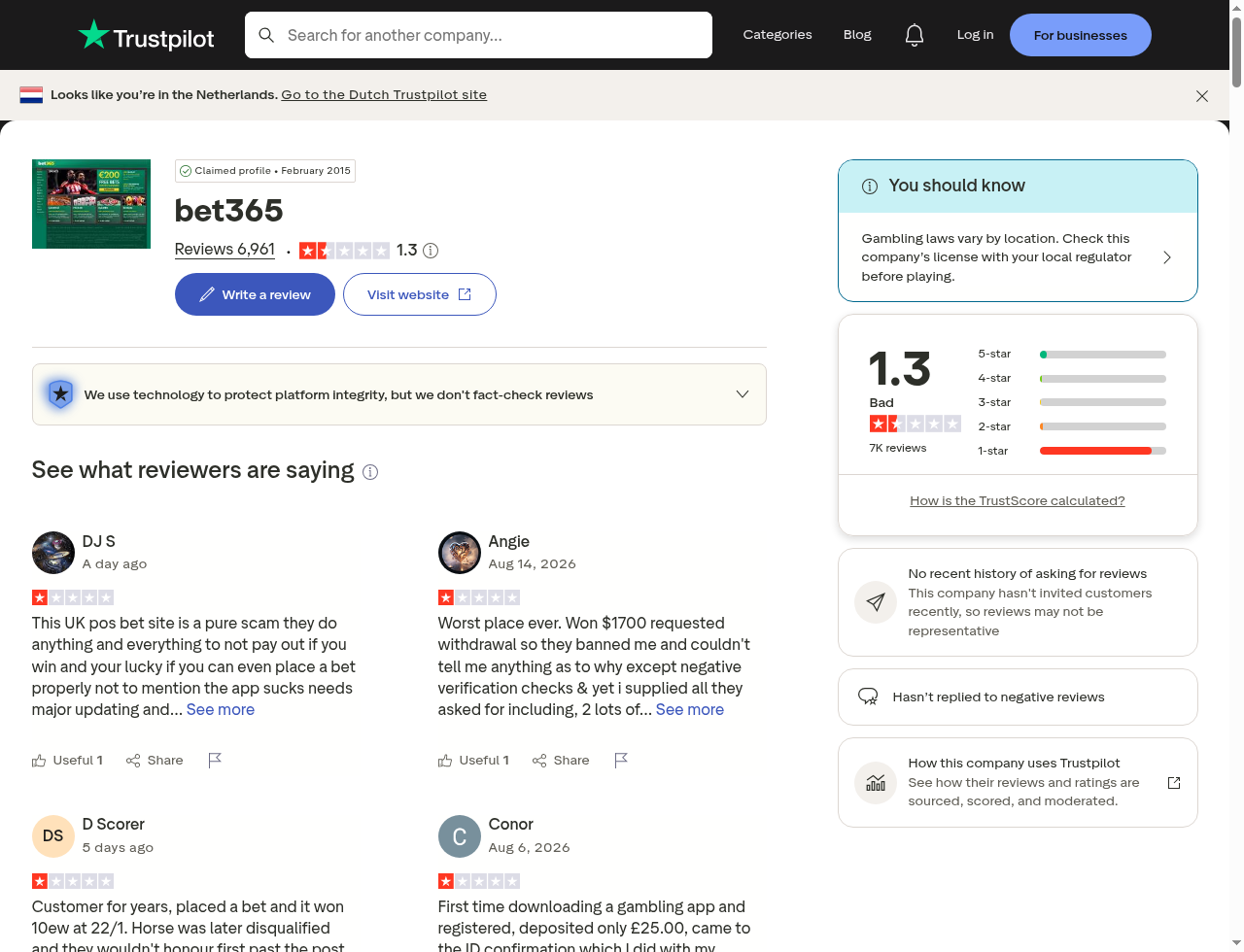
Public commentary is worth reading for direction and worth nothing as proof. A dated public review profile exists for the brand, and the capture held for it shows that profile as it stood on 21 August 2026. Individual reviews inside it are unverified: they cannot be tied to an account, an amount or a date that a third party could re-check, and praise and complaint alike are trivially manufactured. What such a profile can do is indicate which questions to put to the operator in writing, typically about verification thresholds, payout windows and bonus conditions. The profile address is retained as evidence metadata rather than offered as a destination.
Chronology, open items and the correction path
Every claim carries the same check date, 21 August 2026, and the chronology makes clear which record settles what. Two open items dominate: the licence identifier absent from the captured seal, and the register entry detail for the named entity. Neither is inferred. Our checks run in a fixed order — exact-address query, register, statute, then context — and a rating moves off amber only when the underlying record moves, an approach set out under methodology and governed by our editorial policy. Corrections are treated as evidence work rather than opinion: send the dated record, the exact address it refers to and the source it came from, and the rating is re-run against it. Comparable files for other Maltese-facing services are indexed under casinos.
| Date | Record | Tier | Settles | Leaves open |
|---|---|---|---|---|
| 2026-08-21 | Exact-address query for bet365.com in the licence URL checker | Primary | The named current record returned for that address | The licence number absent from the seal |
| 2026-08-21 | Authority licensee register consulted live | Primary | That a searchable company-level register exists | Entry detail for the named operator |
| 2026-08-21 | Chapter 583 text | Primary | The statutory frame for gaming in Malta | Authorisation standing of any single host |
| 2026-08-21 | Public review profile | User context | That dated public commentary exists | Every individual account within it |
Frequently asked questions
Is Bet365 a scam according to the current record?
No adverse record appears in the four dated sources, and a scam finding is not supported. Equally, nothing in them proves a clean licence match for the exact address, because the seal in the captured query showed no number. That is an open evidence position rather than an accusation, and your own exact-address query is the fastest way to close it before any deposit.
Why is the rating amber rather than green?
Green requires current primary evidence covering the precise address and the named entity, including the licence identifier that links them. The captured return did not display one. Nothing official or corroborated points the other way either, so red would be wrong as well. Amber is the accurate reading of an unresolved file.
Does the name Hillside (Europe) ENC prove Maltese authorisation?
A company name is an identity claim, not an authorisation record. None of the four sources supplies a registration number, licence class, issue date or expiry date for that entity, so none is stated. Searching the live register by legal name and comparing status and listed addresses is the check that settles it.
How do I separate bet365.com from a lookalike address?
Type the address by hand, compare it character by character, and confirm the certificate subject names the same registrable domain. Then check that the login form and the cashier stay on that domain, and run the full address through the exact-address checker instead of searching for the brand name.
Do the public reviews prove withdrawal problems?
No. The profile is dated context, and the individual reviews inside it are unverified and unattributable. Patterns in commentary can usefully shape the questions you ask in writing, but only a dated competent record or your own documented file, with amounts and timestamps, settles a payment dispute.
What would change the rating?
Green would need a current primary return that displays a licence identifier tied to both the exact address and the named entity. Red would need an official adverse record or corroborated documented evidence. Anything short of those keeps the file amber, with the open items stated rather than filled in.